

February 27, 2026
Airway Orthodontic
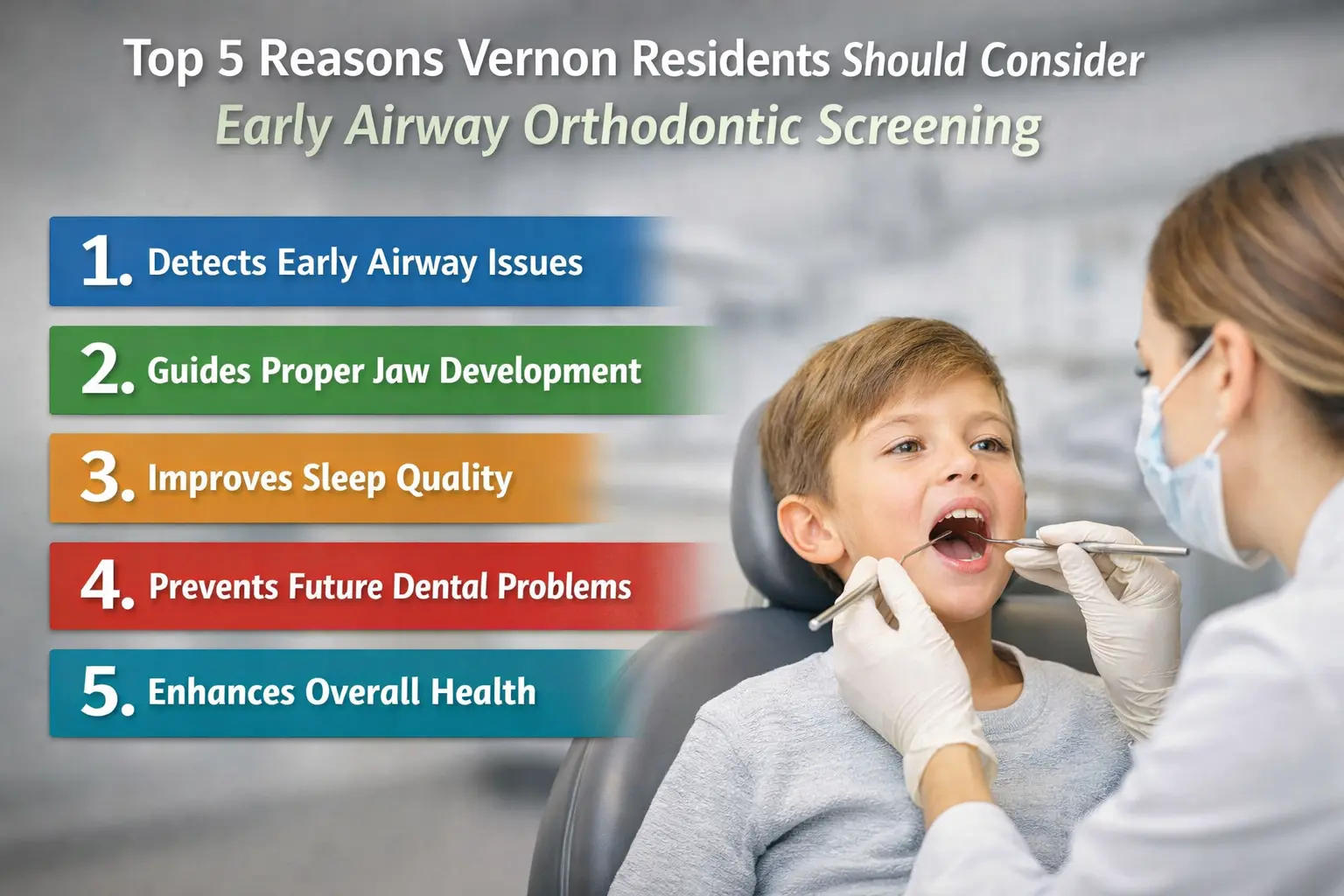
Your child’s jaw shape affects a lot more than how their teeth will eventually line up. It influences how they breathe, how well they sleep, how they behave in school, and even how their face develops over time. For most families, that connection isn’t obvious – because nobody tells you to look for it.
Airway-focused orthodontics is a growing area of dental care built on that exact connection. It examines the relationships among jaw structure, oral breathing habits, tongue posture, and sleep quality and identifies interventions that work best when applied early, during the years when bone and tissue are still actively developing. The window for the most impactful treatment is narrower than most parents realize.
Here are five substantive reasons why early airway orthodontic screening deserves a place on your health radar – before problems have time to compound.
Reason 1: Breathing Patterns Established in Childhood Tend to Stick
Families who seek airway orthodontics in Vernon are often responding to something they’ve noticed but couldn’t fully explain – a child who breathes through their mouth constantly, snores regularly, or seems perpetually tired despite getting enough sleep. These aren’t random quirks. They’re frequently signs of an underlying structural issue involving the airway, jaw, or oral tissues.
Chronic mouth breathing, for example, is both a symptom and a cause. A child who breathes habitually through their mouth does so because nasal breathing feels difficult – often due to narrow palate width, enlarged adenoids, or a tongue that rests low in the mouth instead of against the palate. But continued mouth breathing then reinforces those structural tendencies, because the forces the tongue and lips exert on developing bone shape the jaw itself.
Nasal breathing, by contrast, filters and humidifies air, produces nitric oxide that dilates blood vessels, and supports proper jaw and facial development. The American Academy of Pediatric Dentistry recognizes mouth breathing as a risk factor for malocclusion and altered facial growth. Catching the pattern early while the palate is still highly malleable allows for intervention before it calcifies into a permanent structural issue.
Reason 2: Sleep-Disordered Breathing in Children Is Underdiagnosed
Sleep-disordered breathing (SDB) in children encompasses a spectrum of conditions, from primary snoring to upper airway resistance syndrome to pediatric obstructive sleep apnea. According to the American Academy of Sleep Medicine, pediatric obstructive sleep apnea affects between 1% and 5% of children, but far more go through years of poor-quality sleep without a diagnosis, because the symptoms don’t always look like what parents expect.
Children with disrupted sleep rarely appear sleepy in the way adults do. Instead, they often present with hyperactivity, difficulty concentrating, emotional dysregulation, behavioral challenges at school, or bedwetting. Research published in JAMA Pediatrics found that children with sleep-disordered breathing are significantly more likely to receive ADHD diagnoses than children without it and that behavioral symptoms frequently improve with treatment of the underlying breathing problem.
An airway screening during a dental visit can identify structural signs, such as jaw narrowing, tongue position, tonsil size, and bite patterns, that may suggest a child is struggling with nighttime breathing. That’s information worth having before years of lost sleep affect development, behavior, and learning.
Reason 3: Jaw Development Has a Time-Sensitive Window
The upper jaw (maxilla) and lower jaw (mandible) develop on distinct but overlapping timelines. The palate – the roof of the mouth is formed by two separate plates of bone that fuse at a midline suture, typically completing fusion between the mid-teens and early twenties. Before that fusion occurs, the palate can be widened and shaped with relatively gentle, sustained forces. After it fuses, the same result requires surgery.
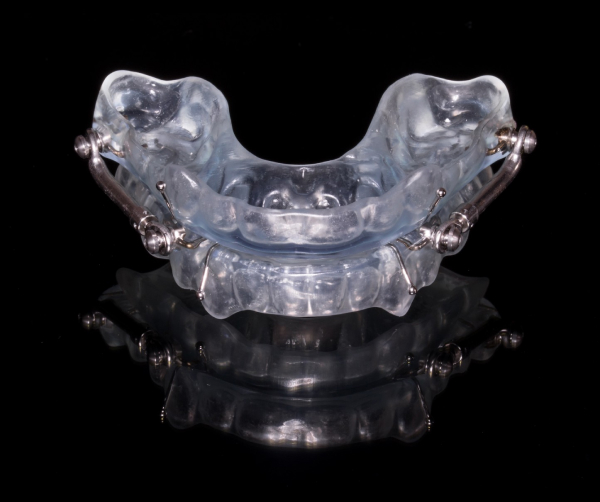
This is the core argument for early screening. A child with a narrow palate at age seven can often be treated with a palatal expander – a non-surgical appliance that widens the palate gradually by separating the two bone plates before they fully unite. The result is more space for the teeth, a wider arch, and critically, a wider nasal cavity that makes nasal breathing easier. A teenager at fifteen or sixteen has a much shorter window. An adult has none without surgical intervention.
For families in Vernon, CT, with children in the early elementary years, this window is often still wide open. A screening doesn’t commit you to treatment; it tells you whether intervention is worth considering and, if so, how much time you have.
Reason 4: Tongue Posture and Swallowing Habits Shape the Jaw
The tongue exerts constant, low-grade pressure on the surrounding dental arches, roughly four to six ounces of force during swallowing alone, repeated thousands of times each day. When the tongue rests correctly against the roof of the mouth, with the tip just behind the upper front teeth, it naturally widens the palate and supports proper arch development. When it rests on the floor of the mouth or pushes against the front teeth (a pattern called tongue thrust), those forces work in the opposite direction.
Tongue thrust swallowing and a low tongue posture are often associated with oral breathing patterns, tongue tie (ankyloglossia), or a learned habit. Left unaddressed, they contribute to open bites, narrow arches, protruding front teeth, and the need for more extensive orthodontic work later. Myofunctional therapy – exercises that retrain tongue and lip posture is often a component of airway-focused care, and it works best when the habits are caught and corrected early.
Reason 5: Early Screening Simplifies and Sometimes Prevents Later Treatment
This is where airway-focused care connects directly to the practical concerns most families have. Orthodontic treatment is an investment of time, money, and patience. When structural problems are caught early and addressed with phase-one interventions such as expanders, braces, or myofunctional therapy, the need for later treatment is reduced.
A child whose palate widens at age eight may have sufficient space for all their permanent teeth to erupt without crowding — eliminating the need for extraction and simplifying any phase-two treatment considerably. A child whose mouth-breathing habit is corrected at age nine may avoid the facial development pattern (often described as “long face syndrome”) that becomes progressively harder to address with age.
Early screening is also low-stakes in the most important sense: it costs very little to assess and provides information that either reassures you or gives you actionable options. That’s a favorable ratio for any health decision.
What an Airway Screening Looks Like at Dr. Jay Family Dental
Dr. Jay Family Dental serves Vernon and the surrounding communities with an integrated approach to dental and orthodontic care. An airway screening is a focused evaluation that takes place within a standard dental visit and looks at several key factors:
- Palate width and arch shape — assessing whether the upper jaw has adequate width to support nasal breathing and proper tooth alignment
- Tongue posture and function — observing where the tongue rests at rest and during swallowing
- Tonsil and adenoid size — evaluated visually and through patient history
- Breathing patterns — identifying habitual mouth breathing or nasal obstruction
- Bite relationships — looking at how the upper and lower teeth meet, including overbite, crossbite, and open bite patterns
- Facial growth patterns — assessing whether the face is developing in a balanced, forward direction
Findings are discussed openly. Honest guidance is provided on whether follow-up is recommended. Available options are explained clearly. You are also informed about what may happen if monitoring is chosen instead of immediate intervention. The goal is information, not pressure.
The Right Time to Screen Is Before Problems Take Hold
The families who benefit most from airway screening are those who act during the years when bone and tissue are still shaping themselves. Children in that window, roughly ages five through twelve, have the most to gain from early evaluation. But adults dealing with longstanding breathing, sleep, or jaw issues deserve answers too.
Dr. Jay Family Dental offers airway-focused evaluations alongside comprehensive dental and orthodontic care for the whole family. Call today or book online at drjaydental.com. A single appointment could give you information that genuinely changes the trajectory of your child’s health or your own.
People Also Ask
At what age should a child have an airway screening?
Most airway-focused dentists recommend an initial screening between ages five and seven. At this stage, enough permanent teeth have erupted to assess arch development. The palate is also highly responsive to intervention.
However, screenings are appropriate at any age. Adults can benefit from airway evaluations as well. This is especially true for those with chronic snoring, fatigue, or TMJ symptoms that have not responded to other treatments.
What is a tongue tie, and how does it relate to airway development?
Tongue tie (ankyloglossia) is a condition in which the tissue connecting the underside of the tongue to the floor of the mouth is shorter or tighter than normal. Tongue movement is restricted as a result. The tongue may not rest properly against the roof of the mouth. Palate development and swallowing patterns can be affected. In some cases, speech may also be impacted. Tongue tie can be evaluated during an airway screening. When developmental problems are caused, a simple release procedure called a frenectomy is often recommended. Myofunctional therapy may be advised afterward to retrain tongue function.
Can adults benefit from airway-focused orthodontic care?
Yes, though the options differ from those available for growing children.Adults whose palates have fully fused cannot be treated with a traditional expander. However, oral appliance therapy for sleep apnea can still be used. Myofunctional therapy may help improve tongue posture and breathing habits. In more severe cases, orthognathic (jaw) surgery may be recommended. Airway-supporting appliances can also be worn during sleep. An evaluation will clarify which options are appropriate based on your anatomy and symptoms.
How is a palatal expander different from standard braces?
Braces move teeth within an existing arch. A palatal expander widens the arch itself by separating the two halves of the palate and allowing new bone to fill in the gap – a process called sutural expansion. The result is a physically wider upper jaw, which creates more space for teeth and often significantly improves nasal airflow. The appliance is typically worn for several months and is most effective before the palatal suture closes, generally in the early-to-mid teen years.
Will my child’s pediatrician screen for airway issues?
Pediatricians do screen for some airway concerns, particularly enlarged tonsils and adenoids, and may refer to an ENT (ear, nose, and throat specialist) for evaluation. However, the dental component of airway assessment through jaw width, palate shape, tongue posture, and bite patterns is typically outside the scope of a standard pediatric visit. A dentist trained in airway-focused care provides a complementary perspective that fills an important gap, particularly for children whose symptoms are subtle or whose airway issues are structural rather than primarily ear-nose-throat related.
Recent Posts
February 27, 2026
Top 5 Reasons Vernon Residents Should Consider Early Airway Orthodontic Screening
February 24, 2026
How Orthodontic Treatment Can Improve Oral Health

February 20, 2026
Top Cosmetic Dental Procedures Available in Vernon, CT
February 16, 2026
How Veneers Address Structural Imperfections Like Chips And Small Gaps

January 2, 2026